

The rise of remote executive assistant services is directly tied to the permanent shift toward remote work.
According to the Upwork Future Workforce Report, 32.6 million Americans, roughly 22% of the workforce, are projected to work remotely by 2026. Remote job listings now receive twice as many applications as on-site roles, according to LinkedIn’s Global Talent Trends research.
This is not a pandemic aftershock. It’s a structural change in how talent is distributed. Stanford University research confirms remote workers demonstrate a 13% productivity increase compared to in-office employees. Gallup reports that 59% of employees are more likely to stay with employers offering location flexibility.
For executives, this means one thing: the best remote executive assistant for your business may not live in your city, and that’s no longer a disadvantage.
Hiring a Remote Executive Assistant Reduces Executive Support Costs
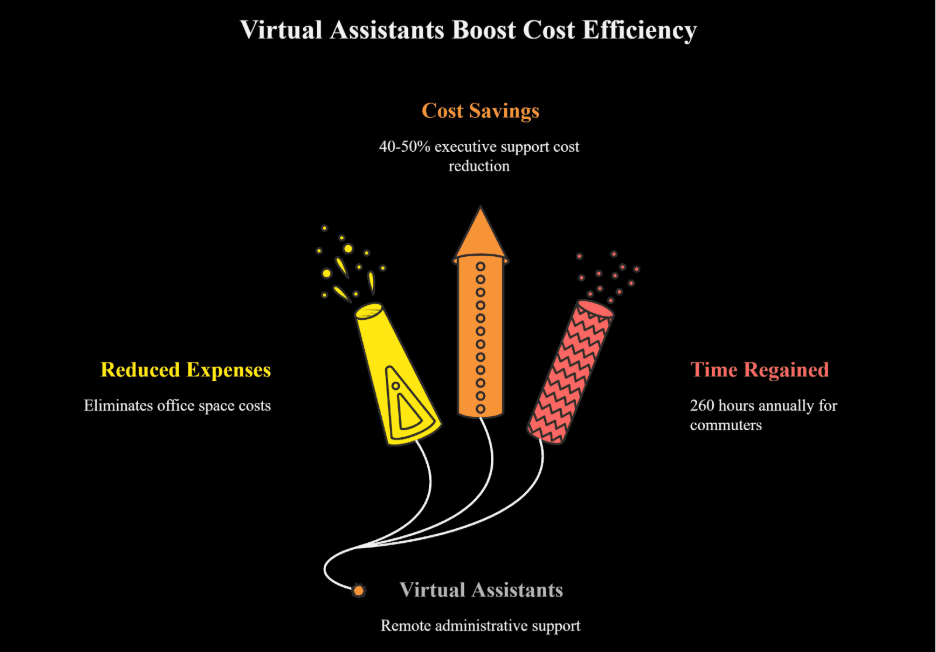
One of the most searched phrases in 2026 is “hire remote executive assistant,” and the reason is simple: cost structure.
Companies that hire remote executive assistants eliminate expenses tied to office space, commuting subsidies, insurance overhead, and on-site infrastructure. Businesses typically reduce executive support costs by 40–50% compared to fully in-house equivalents when factoring in total employment overhead.
On the worker side, FlexJobs reports that fully remote professionals save approximately $12,000 annually on commuting, meals, and related expenses. The U.S. Census Bureau estimates that the average American commuter previously spent 54 minutes per day traveling to and from work, over 260 hours annually regained through remote work.
For executives, that regained time compounds across teams.
Remote Executive Assistants Deliver Measurable Productivity Gains
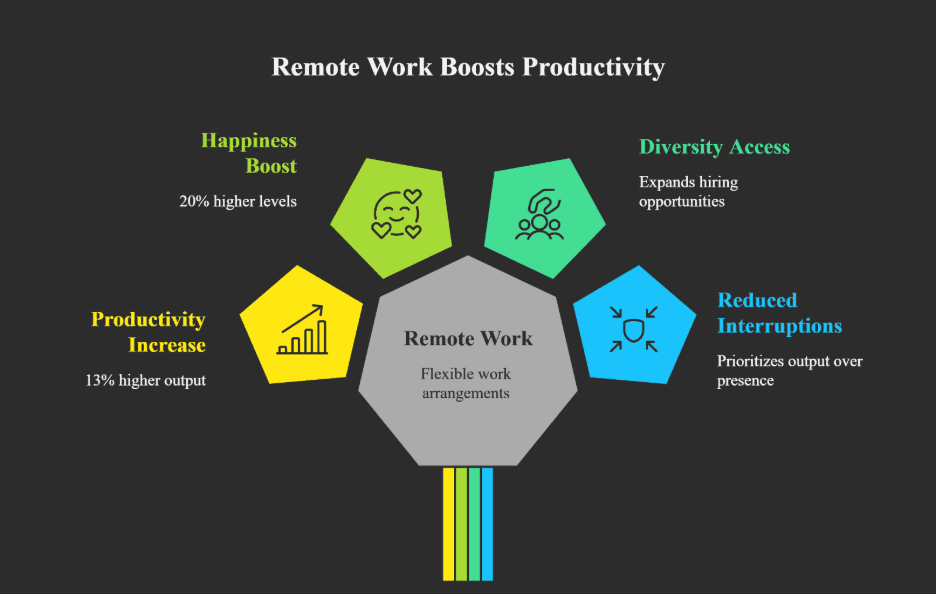
Data continues to validate remote performance.
Stanford’s study on remote workers showed a 13% productivity increase. Tracking Happiness (2024) found remote workers report up to 20% higher happiness levels. McKinsey’s 2023 diversity research found companies in the top quartile for diversity are 36% more likely to outperform peers in profitability — and remote hiring naturally expands diversity access.
Remote executive assistants operate in optimized environments with structured communication tools like Slack, Zoom, and Asana. This reduces interruption-based work and prioritizes output over presence.
For executives, fewer interruptions mean better decisions.
Why Hiring a Remote Executive Assistant Expands Access to Top Talent
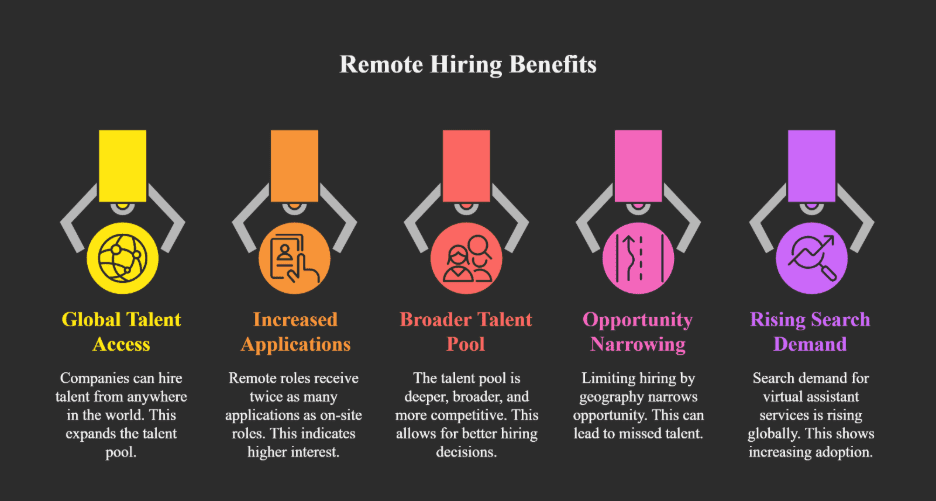
Remote hiring has fundamentally changed access.
Companies in New York now hire operational talent in Bogotá. Founders in Texas collaborate with bilingual executive assistants in Mexico City. Marketing leaders partner with remote executive support specialists across time zones.
Remote roles receive twice as many applications as on-site roles. The talent pool is deeper, broader, and more competitive.
Limiting hiring by geography in 2026 is like limiting marketing to one channel. It narrows opportunity.
That’s why search demand for terms like “hire remote executive assistant,” “remote executive assistant services,” “executive assistant remote,” and “best remote executive assistant services” continues to rise globally.
How Execla Matches Businesses with High-Level Remote Executive Assistants
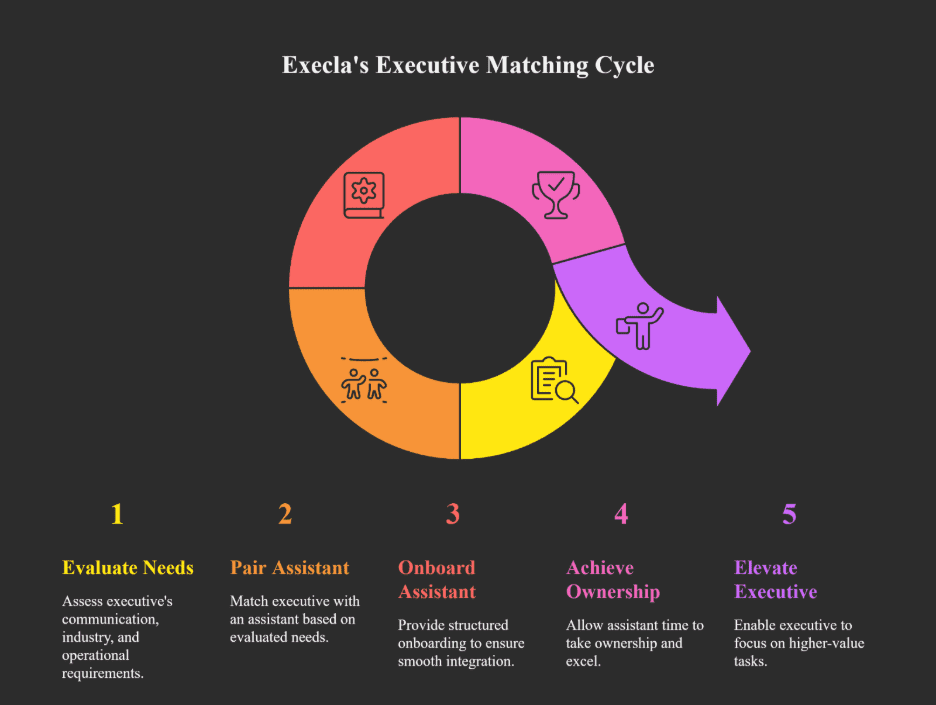
At Execla, we don’t treat remote executive assistant services as transactional staffing. We focus on alignment.
We evaluate communication style, industry exposure, decision-making cadence, and operational complexity before pairing executives with remote executive assistants.
Some clients need structured calendar and inbox management. Others need CRM oversight, sales coordination, marketing implementation, or leadership support.
The goal is not to offload tasks randomly. The goal is to move executives into higher-value work.
And that only happens with clear expectations, structured onboarding, and a 90-day runway for real ownership.
What to Expect in the First 90 Days After Hiring a Remote Executive Assistant
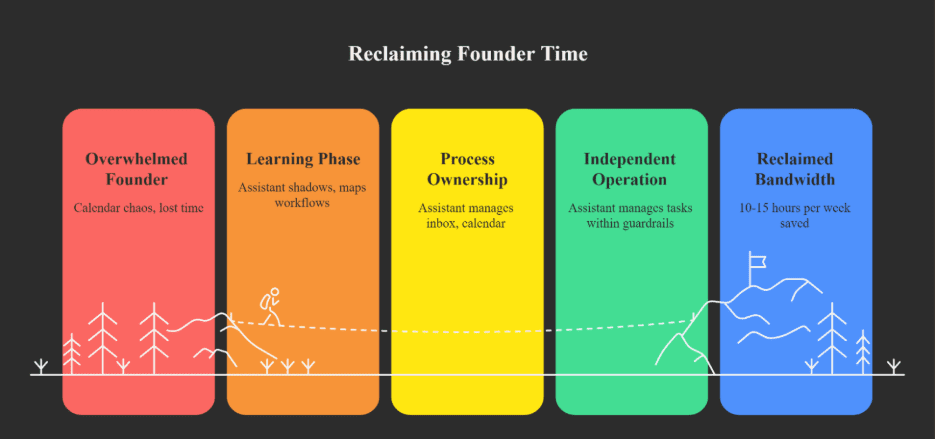
When Michael, a Tech founder and Execla client, first came to us, he wasn’t struggling with revenue. He was struggling with time.
His calendar was overbooked, his inbox was reactive chaos, investor follow-ups slipped through cracks, and strategic work was constantly postponed because administrative fires felt urgent. He didn’t need another productivity app. He needed leverage.
So he partnered with Execla and hired a remote executive assistant.
But here’s what most founders misunderstand: results don’t happen overnight.
The first 30 days weren’t about optimization, they were about learning. His remote executive assistant shadowed meetings, mapped communication patterns, understood decision-making preferences, and documented workflows.
By month two, the focus shifted to process ownership, inbox triage, calendar rules, travel systems, and CRM updates. By month three, she was operating independently within clearly defined guardrails.
Around the 90-day mark, Michael began consistently reclaiming 10–15 hours per week, not because tasks disappeared, but because leadership bandwidth was finally protected.
That’s how real executive support works. Executive support isn’t about speed. It’s about sustainability.
The Future of Executive Support: Why Remote Executive Assistants Are the Standard
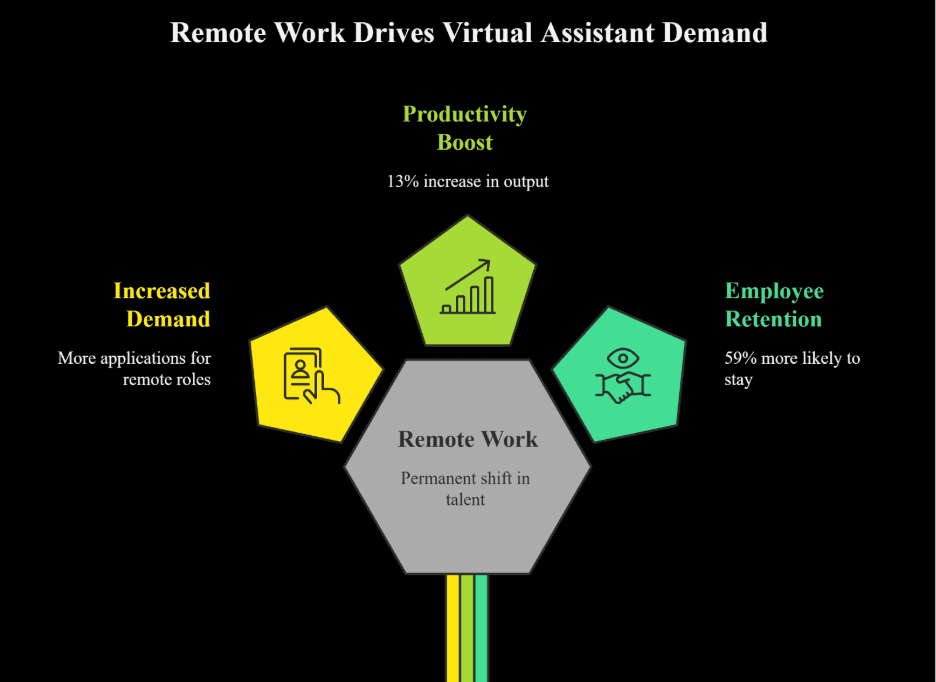
Remote work statistics are not abstract numbers. They reflect how work now functions:
- 32.6 million Americans working remotely by 2026
- 13% productivity gains in remote environments
- $12,000 annual savings for remote professionals
- 59% higher retention with flexibility
- 36% higher profitability in diverse companies
Executive support has followed that shift.
The modern question is no longer, “Can a remote executive assistant work remotely?”
The real question is, “Why limit your leadership capacity by geography?”
In 2026, location is optional. Performance is not.
And with the right structure, remote executive assistants deliver measurable results — not instantly, but intentionally.
That’s the difference between outsourcing tasks and building leverage.
That’s where Execla comes in.
Book a discovery call with Execla and start building executive capacity that scales.
Click here to book a free discovery call