

How Do You Know You’re Overwhelmed and Need an Executive Assistant? First, understand your routine and how you’re actually spending your time. If most of your morning goes into meetings and checking your inbox, and you’re constantly interrupted, you need to think about it. When your strategic work gets pushed to after hours, that’s a clear sign you need help. You weren’t made to do $10 tasks. You’re running a business that needs you, the main person driving revenue, not someone buried in nitty-gritty details.
This guide removes the chaos that comes from hiring the wrong person or onboarding poorly. The right EA has the power to uplift your quality of life and transform your productivity and focus.
This walks you through both sides of the equation: how to hire an outstanding EA and how to onboard them so they become a force multiplier for you.
Why an Executive Assistant Is a Force Multiplier?
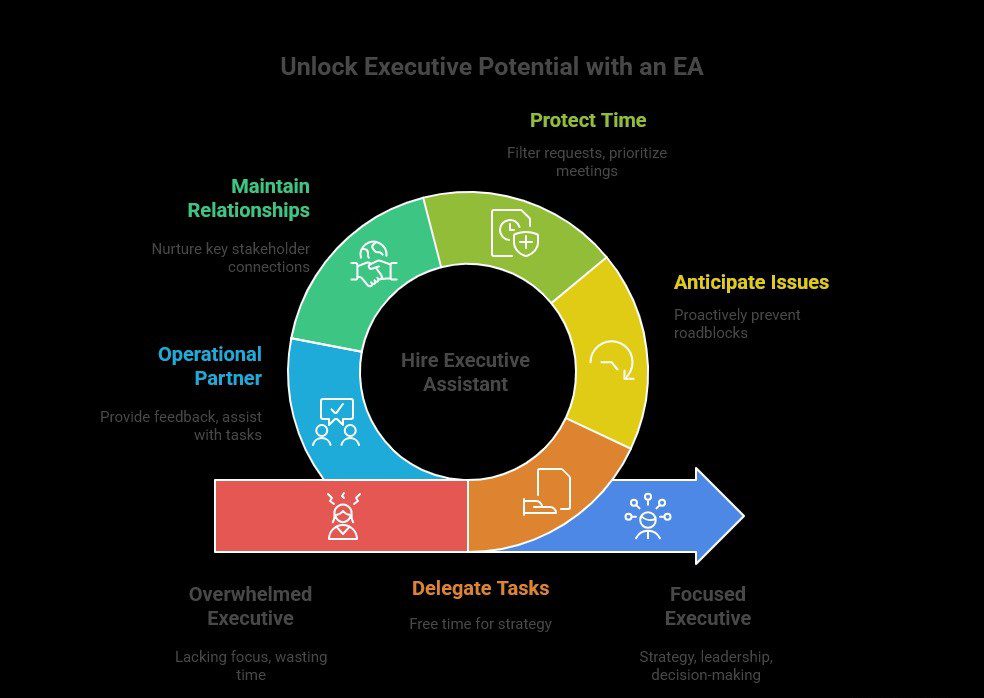
Ever wished you had a copy of yourself? Someone as capable and understanding as you, so you could achieve more in less time?
A great executive assistant doesn’t just manage your inbox or schedule your calendar. They multiply your focus by keeping you locked on what matters while handling the details in the background. Once you share your quarterly, monthly, or annual goals with them, they keep you accountable so you stay on track throughout the year.
When you delegate scheduling, travel, admin tasks, and routine communication, you free hours each week for strategy, leadership, and deep thinking. Many executives spend large parts of their day on work that could be done by someone else at a much lower effective hourly rate. An EA flips that equation by giving you back your highest-value time.
Beyond basic admin, strong EAs:
- Anticipate issues before they escalate
- Protect your time and focus
- Maintain trusted relationships with clients, investors, and internal leaders
- Serve as a sounding board and operational partner
Think of your EA as a force multiplier: someone who helps you do more of the work only you can do, and far less of everything else.
Executive Assistant vs. Administrative Assistant
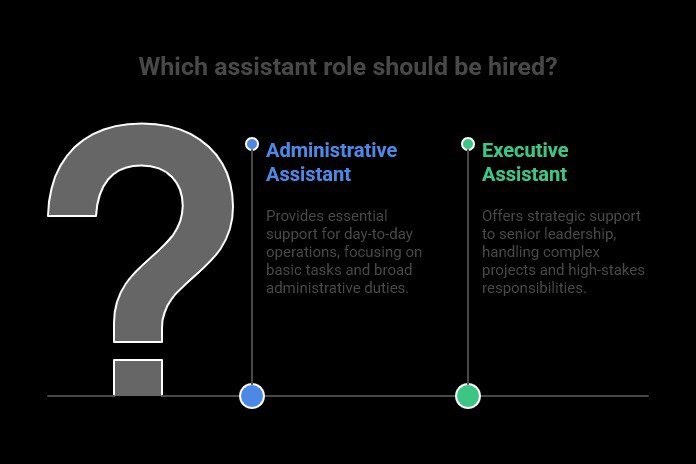
An executive assistant cannot be confused with an administrative assistant. The duties and roles are highly different.
Administrative Assistant
- Hired by an individual, department, or team to support their internal processes
- Duties include scheduling, basic reporting, organizing files, and handling communication
- Typically not involved in high-stakes decisions and sensitive projects
Executive Assistant
- Hired to work closely with senior leadership such as CEOs, founders, and C-suite executives
- Works as an accountability partner and handles email, calendar, and admin operations
- Handles complex tasks like:
- Email management
- Calendar scheduling across time zones
- High-stakes projects with high precision
- Keeping C-suite executives accountable for monthly, quarterly, or annual goals
- Administrative operations such as:
- Travel management
- Investor pitch deck preparation
- Board meeting preparation
- Personal logistics management
- Social media support
- Tools optimization
- Benefit tracking and support
- Has a higher level of autonomy and can make proactive decisions where needed
- Might represent the executive to others
Pro Tip for Hiring: When hiring or onboarding, make sure you’re crystal clear on what you need. You’re looking for a partner, not a task-taker. This clarity will help you define the job description, interview questions, and onboarding method.
Signs You Need an EA and Are Ready to Hire
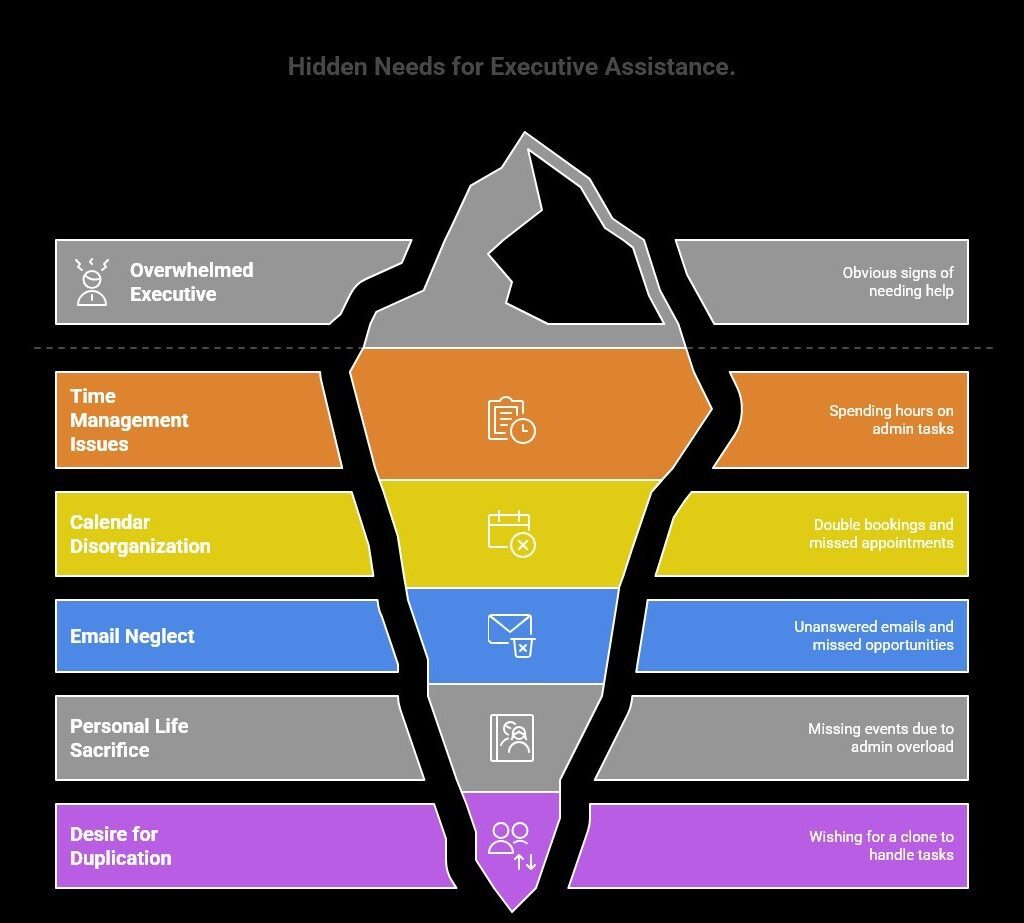
Check for the signs below, and if they sound like you, congratulations. You’re going big and you need an executive assistant for support.
You need an EA if:
- You regularly spend hours on scheduling, travel, and email triage
- You’re double-booked or late because your calendar is a mess
- Important emails sit unanswered for days or weeks
- You miss family events, self-care, or strategic projects because of admin overload
- You’ve caught yourself thinking, “I wish I had a clone”
In early-stage companies, an EA is often one of the first key strategic hires. It’s because of the time and headspace given back to founders and executives, much needed for generating revenue and building key relationships.
Do simple math. If your one hour is worth $1,000 and you’re spending your day doing $20-per-hour tasks, you’re simply costing money to your own company. Delegating these tasks is a smart investment, both for your company and your mental health.
How to Find Someone Who Actually Makes Your Life Easier?
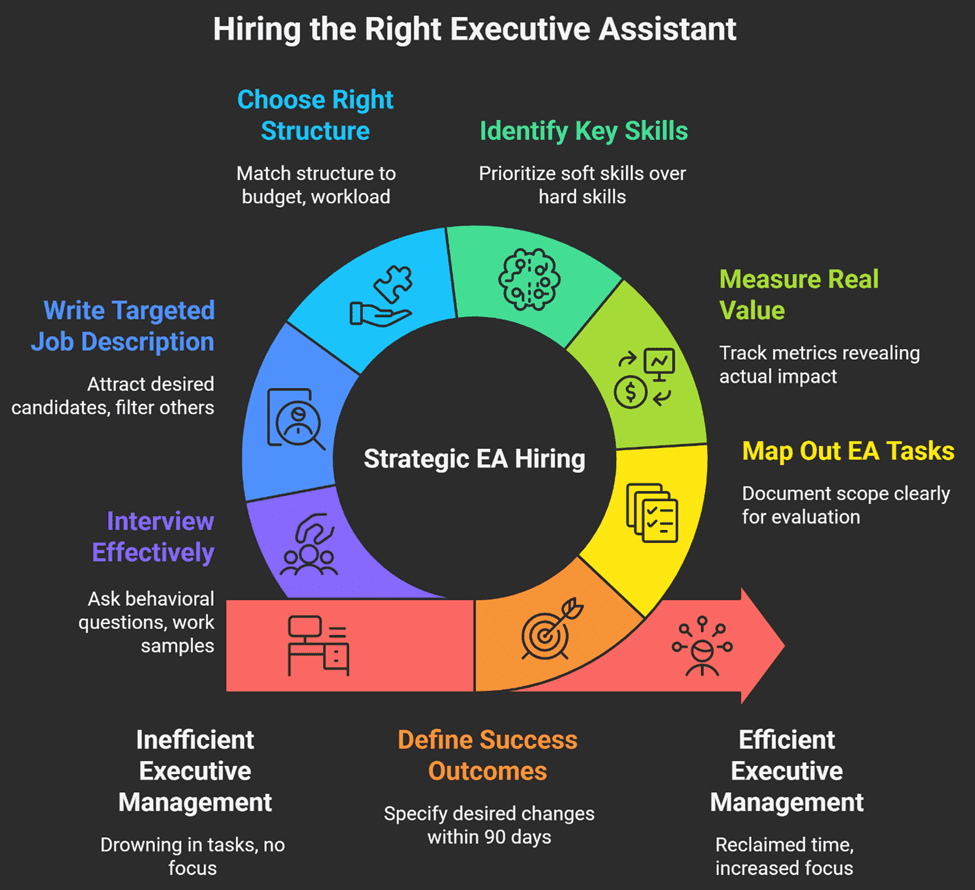
Most executives hire their first assistant the wrong way. They wait until they’re drowning, then rush to post a generic job description and hope someone “nice” shows up. It rarely works out.
The problem isn’t finding great executive assistants, they exist. The problem is most leaders don’t know how to identify them, evaluate them, or set them up for success. Here’s how to do this right.
Step 1-Start With Outcomes, Not Tasks
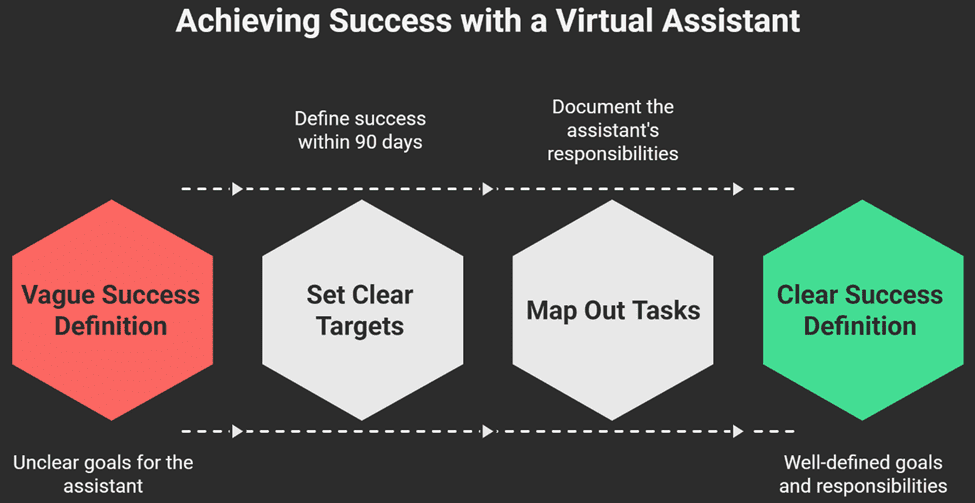
Before posting anything, get specific about what success looks like. Not “someone to handle my calendar”, that’s too vague. Within ninety days, what should actually change? Maybe it’s reclaiming ten hours a week for strategic work. Maybe it’s walking into every meeting fully prepared. Maybe it’s ending each day with an empty inbox.
Write that down. That’s your target.
Then map out what they’ll actually do:
- Triage your inbox and draft responses you’d trust
- Build a realistic calendar with protected focus time
- Coordinate complex travel with backup plans
- Track meeting follow-ups and manage vendor relationships
- Handle personal logistics that would otherwise eat your evenings
Document this scope clearly. Your future EA needs to know exactly what they’re walking into, and you need something to reference when evaluating performance later.
Step 2-Measure What Actually Matters
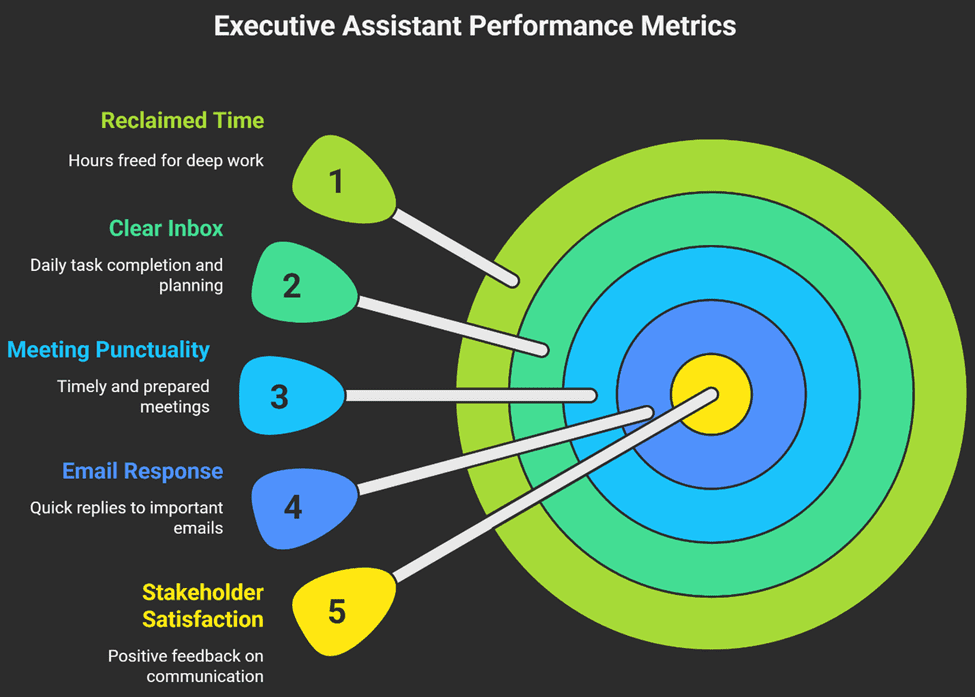
Most people measure activity instead of impact. Your EA isn’t successful because they’re busy, they’re successful when you’re less busy with the wrong things.
Track metrics that reveal real value:
- Average response time on priority emails
- Percentage of meetings that start on time with proper prep
- Hours per week reclaimed for deep work
- Stakeholder satisfaction with communication
- Days you end with a clear inbox and tomorrow’s plan ready
These aren’t about micromanagement. They create shared understanding of what good looks like and give you a way to provide objective feedback.
Step 3-Know Who You’re Actually Looking For
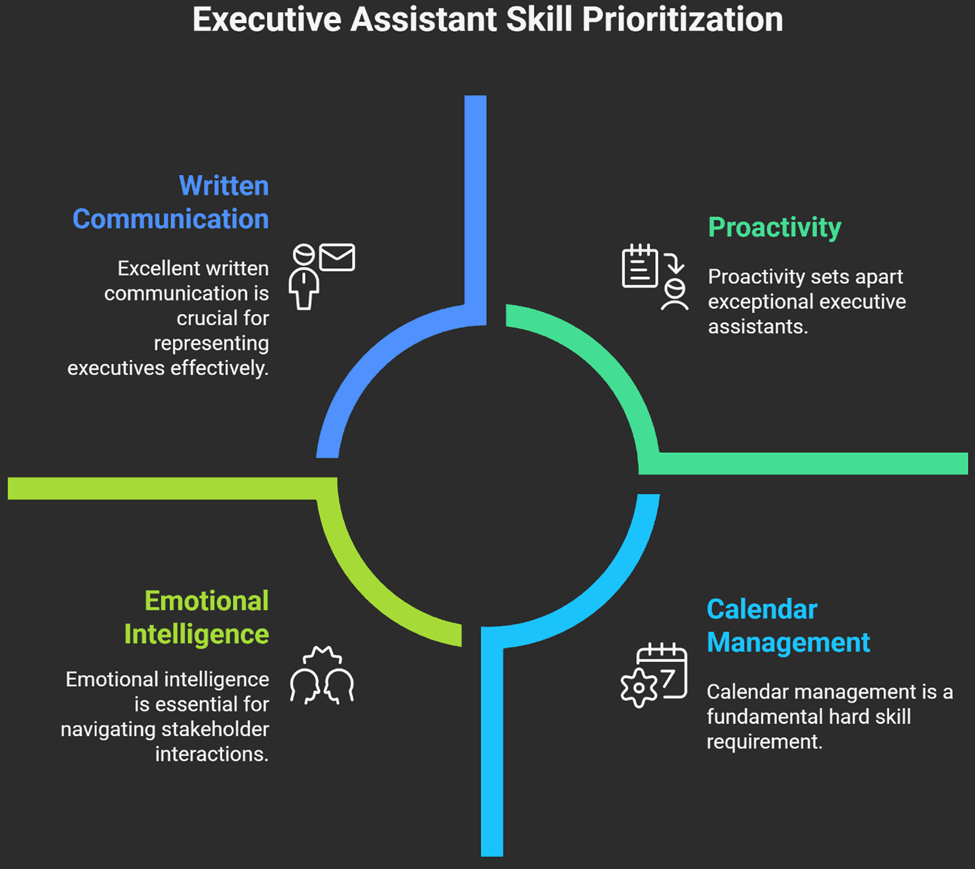
You’re not just hiring skills, you’re hiring someone who will be inside your head, managing your professional life, and representing you to people who matter.
The hard skills are table stakes:
- Mastery of calendar and email tools
- Written communication so good you’d trust them to draft on your behalf
- Comfort with spreadsheets, presentations, and collaboration tools
- Experience coordinating complex logistics
But soft skills determine success:
- Proactivity—they anticipate needs before you ask
- Emotional intelligence and diplomacy with senior stakeholders
- Discretion with board materials, financial data, and personnel issues
- Calm under pressure with competing priorities
- Ownership mindset and problem-solving ability
Look for longevity in their resume. Someone who stayed with previous executives for years is a very different signal than someone who changes jobs every six months. And don’t skip culture fit, if you prefer rapid Slack messages and they prefer structured updates; you’ll both be frustrated.
Step 4-Choose the Right Structure for Your Reality
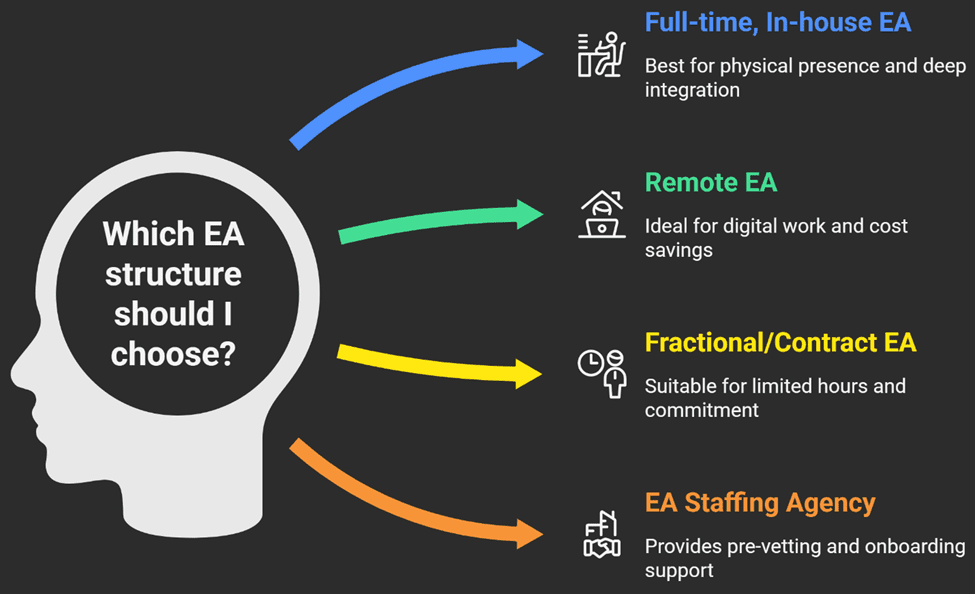
You have options beyond the traditional full-time hire.
Full-time, in-house EA works when you need physical presence, office management, events, document handling. Highest cost, deepest integration.
Remote EA is ideal if your work is already digital. Broader talent pool, often lower cost, perfect if you’re traveling constantly.
Fractional or contract EA gives you experienced support for fifteen to twenty hours a week. Great if you’re not ready for full-time commitment or cost.
EA staffing agency does the heavy lifting—pre-vetting, skills assessment, fit evaluation, and onboarding support. Costs more upfront but saves weeks and improves success odds.
Match the structure to your budget, workload, and need for in-person support.
Step 5-Write a Job Description That Does the Filtering
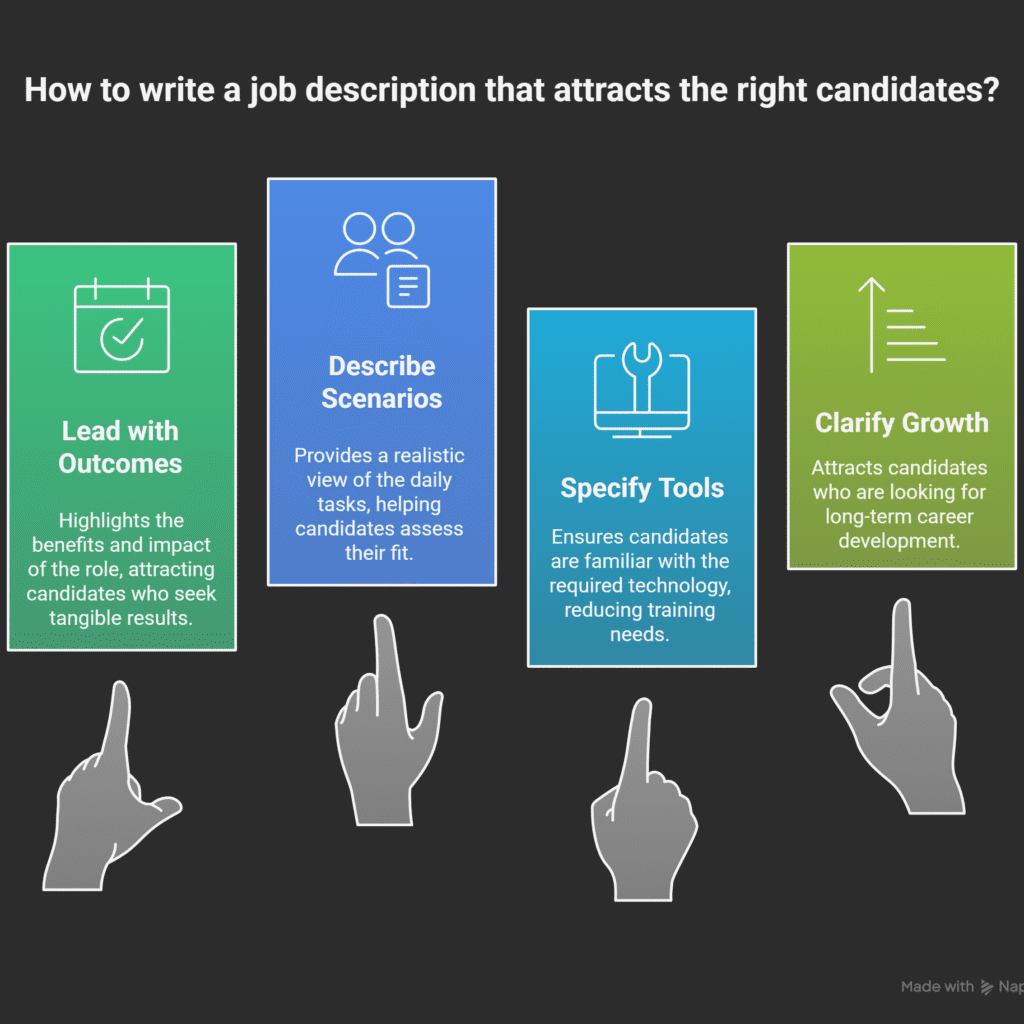
Generic posts attract generic candidates. Your job description should make the right person think, “This is exactly what I’m looking for.”
Lead with real outcomes: “Within ninety days, you’ll own my calendar and inbox, reclaiming ten-plus hours weekly for strategic work.”
Describe actual scenarios: “You’ll manage thirty to forty meetings weekly across three time zones and prepare daily briefings, so I walk into every conversation prepared.”
Be specific about tools and environment: Google or Microsoft? Slack or Teams? What does “confidential” mean in your world—board materials, financials, personnel conversations?
Clarify growth potential: Can this role evolve into operations or chief-of-staff work?
A strong job description attracts who you want and filters out who you don’t.
Step 6-Interview With Real Questions That Reveal Truth
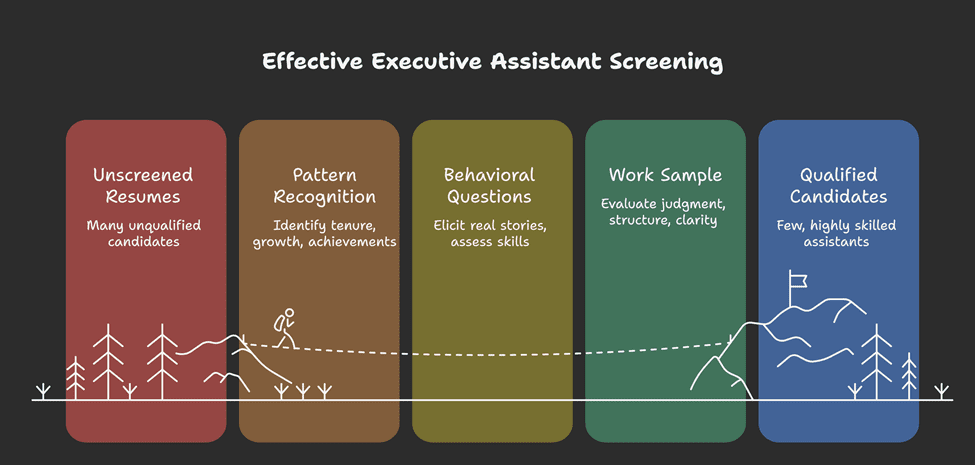
When screening resumes, look for patterns. Multi-year tenure with past executives shows staying power. Increasing responsibility shows growth. Concrete achievements like “reduced executive meeting load by twenty percent while improving satisfaction” show impact.
Red flags include constant six-to-twelve-month job changes, vague task descriptions, and no mention of confidential work or complex logistics.
Ask behavioral questions that force real stories:
- “Tell me about the time you rebuilt an executive’s day at the last minute. What did you do first?”
- “How do you prioritize when everything is urgent?”
- “Describe handling confidential information. How did you protect it?”
- “Walk me through your organizational systems and how you’d adapt them to my workflow.”
Consider a small work sample, draft a tricky email response, create a one-page briefing from links, or rework a messy calendar. You’re looking for judgment, structure, and communication clarity.
Step 7-References Aren’t Optional,They’re Essential
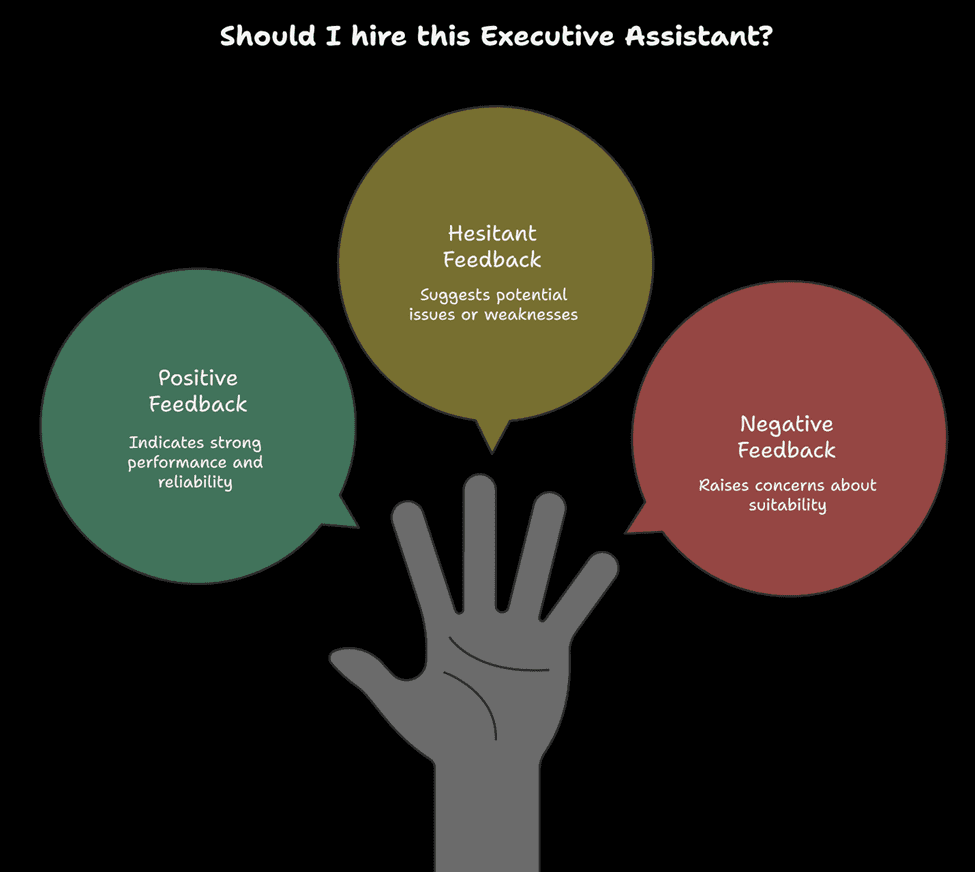
Talk to past executives and ask questions that matter. How did this EA handle pressure and last-minute changes? Did they anticipate or just react? How did they handle mistakes? Would you rehire them, and if not, why not?
Listen for hesitation. “They were fine” isn’t good enough. You want “I’d hire them back in a heartbeat.”
On compensation: Full-time experienced EAs in major markets can reach well into six figures. Remote or fractional EAs charge hourly or retainer rates reflecting the value they provide. Don’t underpay—a great EA saves far more than they cost.
When you find the right person, move fast with a clear offer: compensation, working hours, availability expectations, and start date.
The Partnership That Changes Everything
Hiring an executive assistant isn’t a transaction, it’s building the partnership that will shape how you work and how effective you become.
Get this right and you’ll wonder how you managed without them. Get it wrong and you’ll waste months fixing a bad fit or starting over.
Take time to clarify what you need. Write a job description that attracts the right person. Interview with intention. Check references thoroughly. Once you find someone great, invest in making the relationship work.
Because a great executive assistant doesn’t just manage your calendar. They give you back your time, your focus, and your ability to do the work that actually matters.
Read the next and final part here, where we’ll show you how to pre-board your new EA by packaging everything they need upfront, tools and access, key docs, VIP contacts, org context, and a clear first-week schedule. We’ll also cover building your “Executive’s Bible” with preferences, communication rules, and SOPs so they can act confidently without you. Then we’ll wrap up with the biggest onboarding mistakes to avoid, plus a practical 30–60–90 day success plan to turn the partnership into long-term leverage.