
Great businesses aren’t built on tasks; they’re built on time invested wisely. In today’s fast-paced corporate world, executives need more than someone to answer phones and manage calendars. They need a partner who protects their time, lifts administrative burdens, and strengthens their strategic impact. That partner? The modern executive assistant (EA).
In this era, the executive assistant is the person who provides strategic support to the CEOs, COOs, presidents, and partners. They are the backbone of the executives, so they make sure the CEOs invest their time in valuable and high-priority tasks.
In this blog, we will cover how the assistant role changed over time, starting from an administrative assistant to a strategic partner.
Administrative Era:
In the early days, a professional demand from assistants was to manage schedules, arrange meetings, write memos, take notes, and also act as a gatekeeper for the executive. This role primarily included all the clerical duties that a person expects to perform daily.
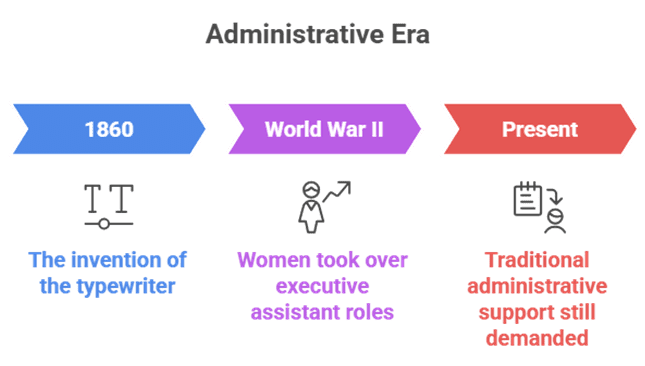
This role evolved with the invention of the typewriter in 1860. The role shifted from mere executive support to learning shorthand, typing, and organizing the cabinet with excellent organizational skills. They also handled telephones and managed diaries and appointments. This was the time when women, due to their adaptability and organizational skills, took over the executive assistant role and filled most of the secretary roles. More women enrolled in this role, specifically during World War II, when the male labor force was absent.
People still demand the traditional administrative support from the EAs.
Digital Era:
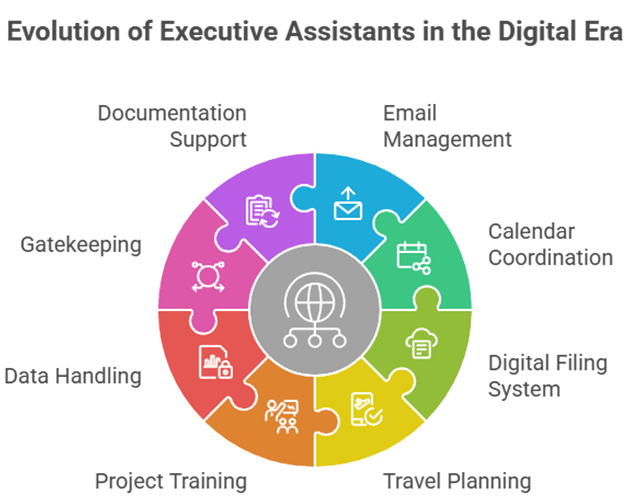
The role of the executive assistant evolved and became more diverse when the world entered the digital era. The memos were replaced by emails. The project and time management software were introduced. The role of EAs moved from a shared paper planner to a digital planner. The role included managing email and answering it on behalf of the executive. This also includes managing the digital calendar, maintaining the digital filing system, travel planning, project training, data handling, and gatekeeping. The documentation role was shifted toward saving time and managing focus hours for the executives by proper scheduling.
Imagine the CEO receiving hundreds of emails and responding to them every day. It not only costs time but also the energy that should be shifted toward the more valuable tasks. The EAs manage the email, answer it on behalf of the executive, and convey all important information.
This was the time for EAs to upgrade their knowledge by learning new digital tools and their applications. This also included fast processing of the information, and now they are the ones whom executives trust. Now they protect all valuable and confidential information crucial for business progress.
Strategic Partnership Era:
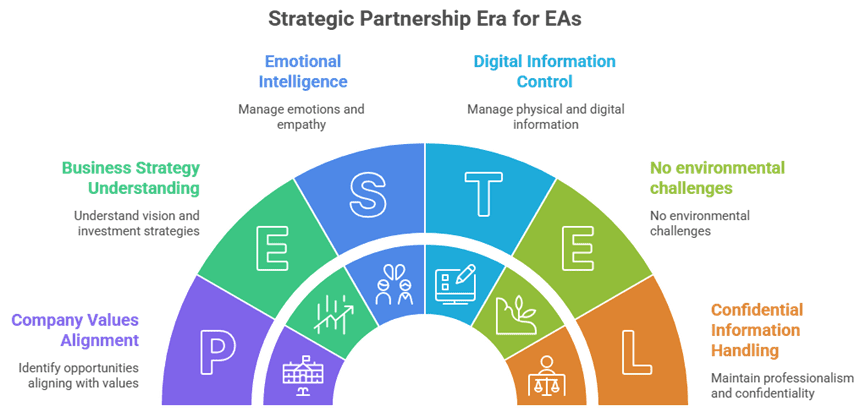
The digital era transformed the executive assistants from doing just administrative tasks to being a strategic partner of the CEO. The EAs are proactive, emotionally intelligent, and have decision-making skills. This era demanded the following traits from EAs:
Proactive Person:
A proactive executive assistant anticipates issues, supports time management, and already knows the initiatives of the market. This proactive support makes the EAs more reliable and trustworthy.
Handling Confidential Information:
EAs contribute to day-to-day operations and are more aware of all the information. EAs must not breach any confidential information. They must maintain professionalism and must be proactive while sharing information. They strictly control the physical and digital information.
Project Management:
EAs, as strategic partners, have business acumen. They understand the project, make strategies, and engage stakeholders with excellent communication skills. They have organizational skills, manage tasks, and strategically align the project with the company’s goal.
Business Understanding:
EAs should understand the vision of the company, its business strategies, and its investment strategies. They improve the efficiency and also manage the project.
High Emotional Intelligence:
The EAs must be introspective and know how to manage their emotions. They should be empathetic and have a passion for work. They should be proactive in understanding the emotional needs of executives. This way they provide the right support, give encouragement, and help in managing stress properly.
Leadership-Oriented:
EA at this stage is leadership-oriented and acts as the chief of staff. They know all the aspects of growth and act as the trusted advisor, manage operations, and identify opportunities that align with company values. They anticipate, make a plan, execute it, and oversee the whole team.
Calendar Management:
The assistant of the executive proactively manages the calendar to amplify the productivity of the CEO. They block time for high-impact activities like decision-making. They also ensure filtering high-value tasks to reach the CEO while gatekeeping.
Email Management:
EA manages the inbox and acts as the replica of the CEO while replying to emails independently. EA can categorize them and organize the information by labeling it according to the priorities of the CEO. They work on the 4D method of Delete, Delegate, Defer, and Do to ensure the smooth workflow.
Strong Communication Skills:
EAs with a strong grip on communication skills bridge the gap between the CEO and workers in the team and also with stakeholders. They also communicate with different departments and keep it concise while delivering it to the CEO.
Trusted Advisor:
CEOs know the information, manage the calendar, have business knowledge, and are emotionally intelligent. With the above hard and soft skills, EAs become the trusted advisor of the CEO.
AI and Automation Era:
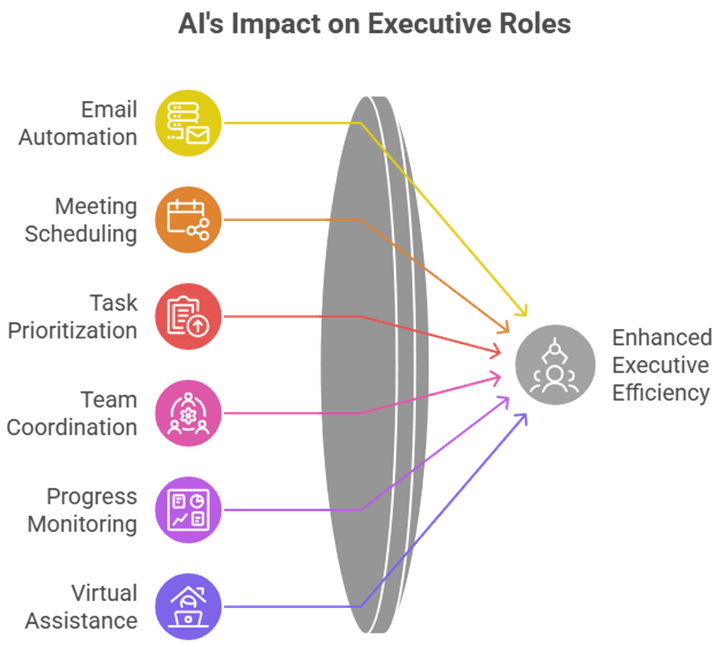
AI is revolutionizing every field and every profession in the world. The role of EA has evolved with modern technology. This is the time when it is not necessary for the EAs to write emails and schedule meetings.
AI automation is now doing this job with more accuracy. It can automatically prioritize the valuable content, send emails, and also answer the queries.AI automation can coordinate the teams and monitor the rate of their progress. It can sort out the high-priority tasks for the executive by understanding the schedule.
AI can analyze areas of low progress in the team. In this way, the chance of improvement and success of the project increased with AI feedback. Remote jobs and freelancing promote the virtual executive assistant. These can handle the work that businesses used to do manually. They complete all the tasks for the executive by using digital tools.
Final Words:
The role of executive assistant is ever evolving from the invention of the typewriter to the introduction of AI in the world. The EAs now not only document the business insights but also act as the leaders of the team. They can instruct others, mentor juniors, measure the progress of the project, and ensure its completion on time. The technological revolution is replacing most of the roles of EAs, and the skills that are still irreplaceable are soft skills. In short, the EAs are co-leaders and the unsung heroes of the industry for delivering valuable work to the clients.